
How to Soothe a Teething Baby Naturally: Gentle Ways to Ease Teething Pain
- nickydaubney

- Aug 6
- 4 min read

One day your baby is all smiles, and the next they’re chewing on everything they can find, dribbling constantly and wanting to be held all day. Sound familiar?
Teething is a completely normal part of your baby’s development, but that doesn’t make it any easier when your little one is uncomfortable.
At The Little Baby Sanctuary, we believe that responsive care, loving touch and simple, gentle techniques can help make this milestone a little easier for both babies and parents.
When do babies start teething?
Most babies begin teething between 4 and 7 months of age, although some start earlier and others much later. Every baby develops at their own pace.
The first teeth to appear are usually the two bottom front teeth, followed by the top front teeth.
Common signs of teething
Not every baby shows the same symptoms, but you may notice:
Excessive dribbling
Chewing on fingers, toys or clothing
Swollen or tender gums
Red cheeks
Irritability or fussiness
Wanting extra cuddles
Changes in feeding
Waking more often at night
Many parents wonder if teething causes a fever. Current guidance suggests that a high temperature, diarrhoea or significant illness are not caused by teething. If your baby seems unwell or you’re worried, contact your GP, health visitor or another healthcare professional.
How to soothe teething pain naturally
1. Offer lots of cuddles and comfort
Your baby isn’t being “clingy”—they’re looking to you for reassurance.
Responsive parenting helps babies feel safe during uncomfortable moments. Holding, cuddling and comforting your baby can reduce stress and help them regulate their emotions.
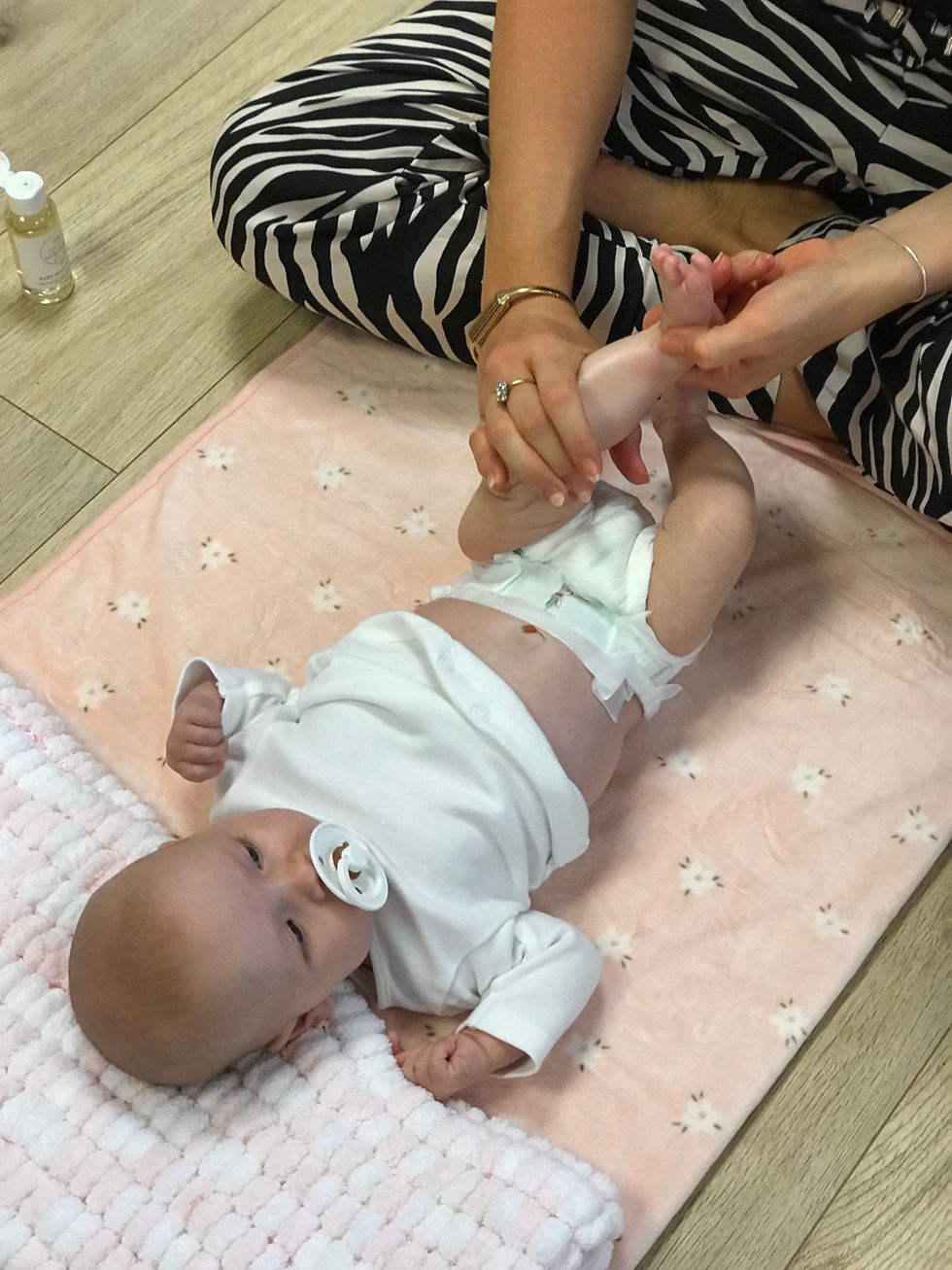
2. Try gentle baby massage
Gentle massage is one of our favourite ways to help babies relax.
Soft strokes around the cheeks, jawline and ears may ease facial tension, while a full-body massage can encourage relaxation and support better sleep.
Research has shown that nurturing touch stimulates the release of oxytocin—the “love hormone”—which helps both babies and parents feel calmer and more connected.
3. Offer a safe teething toy
A firm teething ring gives babies something safe to bite down on, helping relieve pressure on sore gums.
A teething toy chilled in the fridge (not the freezer) can provide extra comfort.
4. Cool foods for older babies
If your baby has started solids, chilled foods such as yoghurt, cucumber or soft fruit can help soothe tender gums.
Always supervise your baby while eating and offer foods that are appropriate for their age and stage of development.
5. Follow your baby’s lead
Some babies need extra naps during teething, while others simply need more comfort.
There is no evidence that responding lovingly to your baby’s needs creates bad habits. In fact, sensitive, responsive caregiving helps babies develop secure attachment and emotional resilience.
Does baby massage really help with teething?
Massage won’t make teeth come through more quickly, but it can help babies feel calmer and more settled.
Many parents who attend our Baby Massage classes tell us that massage becomes part of their bedtime routine during teething because it helps their baby relax before sleep.
As an added bonus, massage gives parents something positive they can do when their baby is having a difficult day.
Should I use teething gels?
Some teething gels and medicines may provide temporary relief, but not every product is suitable for young babies.
Always follow the manufacturer’s instructions and speak to your pharmacist, GP or health visitor if you’re unsure which products are appropriate.
Looking after yourself too
Teething can be tiring for everyone.
If you’re feeling exhausted, know that you’re not alone. It’s completely normal to have days when nothing seems to settle your baby.
Remember:
Your baby isn’t giving you a hard time.
They’re having a hard time.
Your calm voice, loving touch and comforting cuddles are some of the most powerful tools you have.
Gentle support at The Little Baby Sanctuary
Our award-winning Baby Massage classes are about so much more than learning massage techniques.
They offer a calm, welcoming space where you can slow down, spend quality time with your baby, meet other local parents and learn gentle ways to support your baby’s development through every stage—including teething.
Whether your little one is all smiles or having a difficult teething day, you’ll always be welcomed with kindness and without judgement.
Because at The Little Baby Sanctuary, we believe that every parent deserves support—and every baby deserves to feel safe, loved and comforted.
Frequently Asked Questions
Can teething cause a fever?
A mild rise in temperature can sometimes happen, but a high fever is unlikely to be caused by teething. If your baby has a high temperature or seems unwell, seek medical advice.
Does teething affect sleep?
Yes. Sore gums can make it harder for babies to settle or stay asleep. Gentle bedtime routines, cuddles and baby massage may help them relax.
What is the best natural remedy for teething?
Every baby is different, but many families find that cuddles, gentle massage, chilled teething toys and cool foods (for babies on solids) can help ease discomfort.
Can baby massage help with teething?
Baby massage can’t stop teething pain, but it may help babies relax, reduce tension and provide comfort through nurturing touch.
Evidence-informed approach
Research by Tiffany Field has consistently shown that nurturing touch and infant massage support relaxation and reduce stress responses in babies.
Attachment research led by John Bowlby and expanded by Mary Ainsworth highlights the importance of responsive caregiving in helping babies feel safe and secure.
Guidance from NHS also recommends comforting your baby, using safe teething rings and seeking medical advice if your baby develops symptoms such as a high temperature or appears generally unwell


Comments